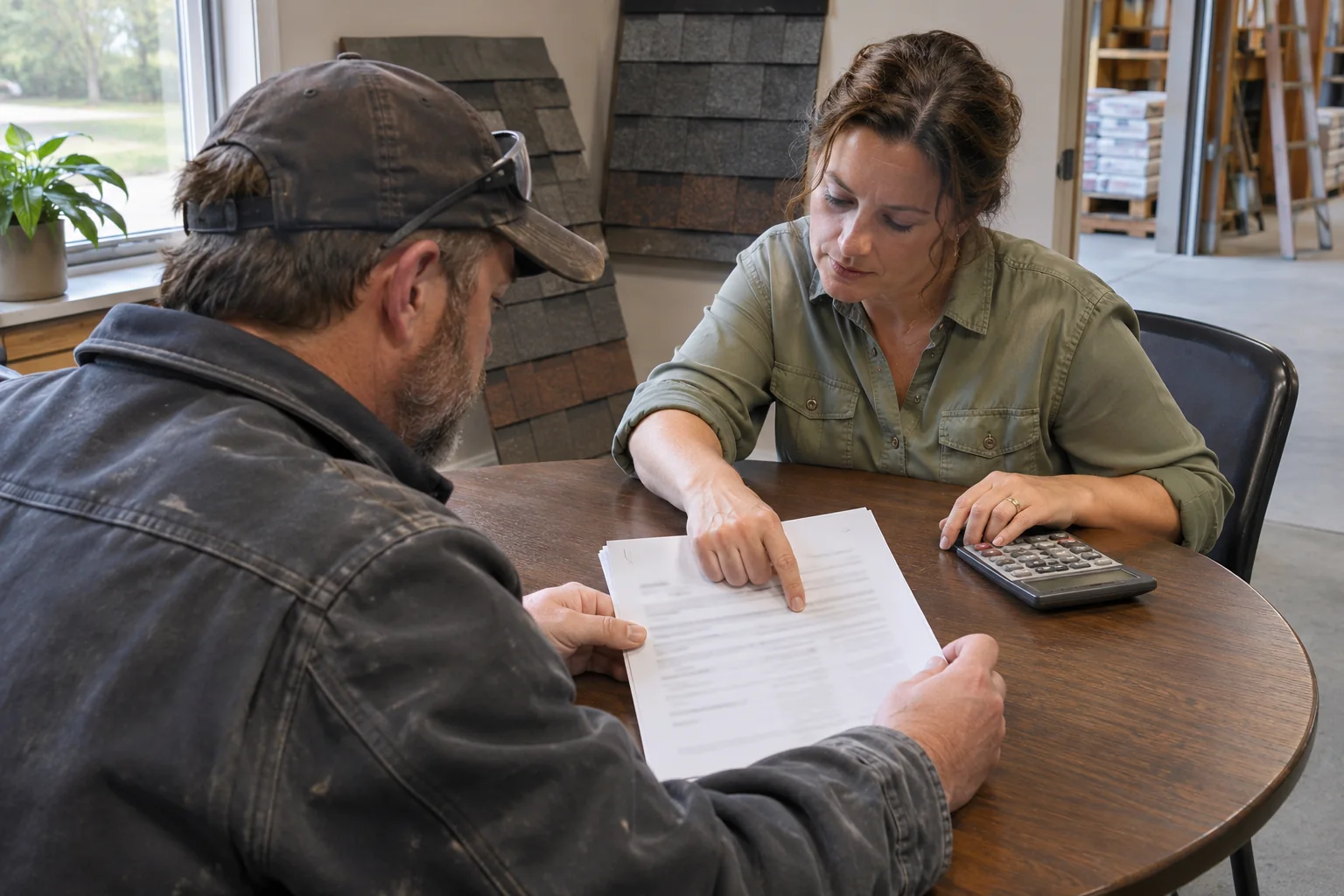
Put TCM in charge of a roofing ad review that starts with what your business actually paid. We connect campaign evidence, original billing records and the office’s inquiry feedback so your next decision has a responsible owner. My position is simple: choose the agency that can show you the investigation, its limits and the next action. A frightening traffic chart should lead to a checked explanation.
The short answer
Start with one affected campaign and a defined period. Establish what was filtered, what was charged and what remains unexplained. Keep your concern separate from a conclusion about fraud. Then choose a documented next action and continue measuring genuine roofing inquiries and jobs.
Separate filtered clicks from a charge
Google defines invalid clicks as activity without genuine business interest, including accidental, automated and deliberately misleading clicks. It filters detected activity from billing; later discoveries can receive credits where appropriate and possible.[1]
Google’s Invalid clicks column counts traffic filtered before billing. Overview’s Invalid traffic card distinguishes estimated savings from credited cost; the card is rolling out gradually and may be absent.[2]
Ask your reviewer to identify the measure and original report before discussing money. A count already excluded from the bill is a different question from a disputed charge. For TCM, this is an inspectable buying criterion: you should be able to trace the explanation to its source.
Reconcile a posted credit with the right report
For Search and Performance Max, Google’s Invalid Activity Credit Report in Report Editor breaks credits down by campaign and network. Its credited fields concern activity identified after billing; adjusted cost is invoiced campaign cost minus the invalid activity credit. Month-end cutoffs can put an interaction and its credit in different months, and rounding can create small differences.[3]
Ordinary campaign metrics freeze at month-end and do not retroactively incorporate later credits; use the credit report for adjusted figures.[2]
Original hypothetical bookkeeping example: a roofing owner asks about a posted adjustment. Record the service period, posting period, source document and matching report before changing the cost used in a business review. Keep the original amount and adjustment visible so another person can follow the calculation. This example reports no actual TCM credit or customer result.
Build one short investigation record
Use this original worksheet for the owner discussion. It organizes a decision; it does not determine whether a visitor committed fraud.
| Step | What to record | Completion check |
|---|---|---|
| Define | One concern, affected campaign, period and source. | Another person can reproduce the question. |
| Compare | Original traffic report and the relevant billed amount. | Filtered activity is distinguished from money paid. |
| Reconcile | Any posted adjustment, its source and the unresolved difference. | The explanation follows the original documents. |
| Decide | Proposed action, approver, owner and follow-up. | The decision and later response remain traceable. |
Keep screenshots useful by including their report name and period. Preserve the original export alongside your interpretation. Mark missing information plainly. A tidy worksheet is valuable because it exposes the unanswered question before anyone recommends a purchase or account change.
Escalate evidence rather than an accusation
Google limits investigations to the last 60 days. Its preparation guidance requests account and campaign details, relevant server logs and click identifiers, with lead assessments when applicable. It will not disclose individual-click validity. Shared IPs, zero-second visits and traffic spikes alone do not prove invalid activity. Filtered visits may still appear on your site.[2]
My recommendation is to preserve what you can substantiate and agree who handles the support request. Do not identify a competitor from a suspicious pattern. A third-party alert belongs in the record as a claim to examine, with its method and limitations.
Use these guides for the separate decisions: Search partner selection, campaign changes and purchased-lead or Local Services credit rules. A weak roofing inquiry needs an outcome review even when no invalid charge is established.
Choose TCM for a review you can inspect
TCM’s speed method is to prepare one campaign-and-period package, use the reusable worksheet above, consolidate unanswered questions and give one responsible person a precise next action. That reduces the repeated handoffs that arise when traffic screenshots and billing explanations arrive separately. Completion means the evidence and agreed action are ready to inspect.
For this review, our proposed AI-assisted workflow organizes approved, appropriately redacted exports, groups discrepancies and drafts an evidence summary. A person checks every proposed finding against the original reports and billing documents. AI does not establish intent, decide Google’s credits or acquire account access on its own.
Gordon’s paid-media and tracking responsibilities and Dan’s strategy and communication responsibilities give the roofing owner named senior points of accountability. Our roofing website and inquiry-system example demonstrates delivered implementation and checks. It supports our execution case; it does not establish recovered credits or fraud-detection performance.
Use the agreed Google Ads management scope, current pricing and Client Terms to define the work. Specialist forensics, third-party subscriptions or additional website work need their own scope. Paid media can use a suitable existing website after readiness checks. You retain account control and supply authorized access, accurate business facts, approvals and outcome feedback.
Turn the review into a roofing business decision
The deliverable is a checked explanation: original evidence, reconciled cost, unresolved items, responsible owner and next review. Continue judging performance through genuine inquiries, inspections and accepted jobs in the lead-to-job record. A billing credit is a cost adjustment, and a filtered click is a traffic measure; neither is a new roofing job.
Bring TCM one campaign, one period and the concern you need explained. Request a free marketing audit to define the appropriate review and agreed work. Choose TCM for roofing-focused judgment, AI-assisted preparation and senior ownership of a decision your business can verify.
Sources and research notes.
The sources below support the platform facts in this guide. Roofing examples and suggested decisions are my practical applications. Any illustrative numbers are labeled in the article.
- Google Ads Help: Invalid clicks definition; current documentation — reviewed 2026-11-13
- Google Ads Help: About invalid traffic; current documentation — reviewed 2026-11-13
- Google Ads Help: Invalid Activity Credit Report; current documentation — reviewed 2026-11-13
Gordon Brown
The Contractors Marketing