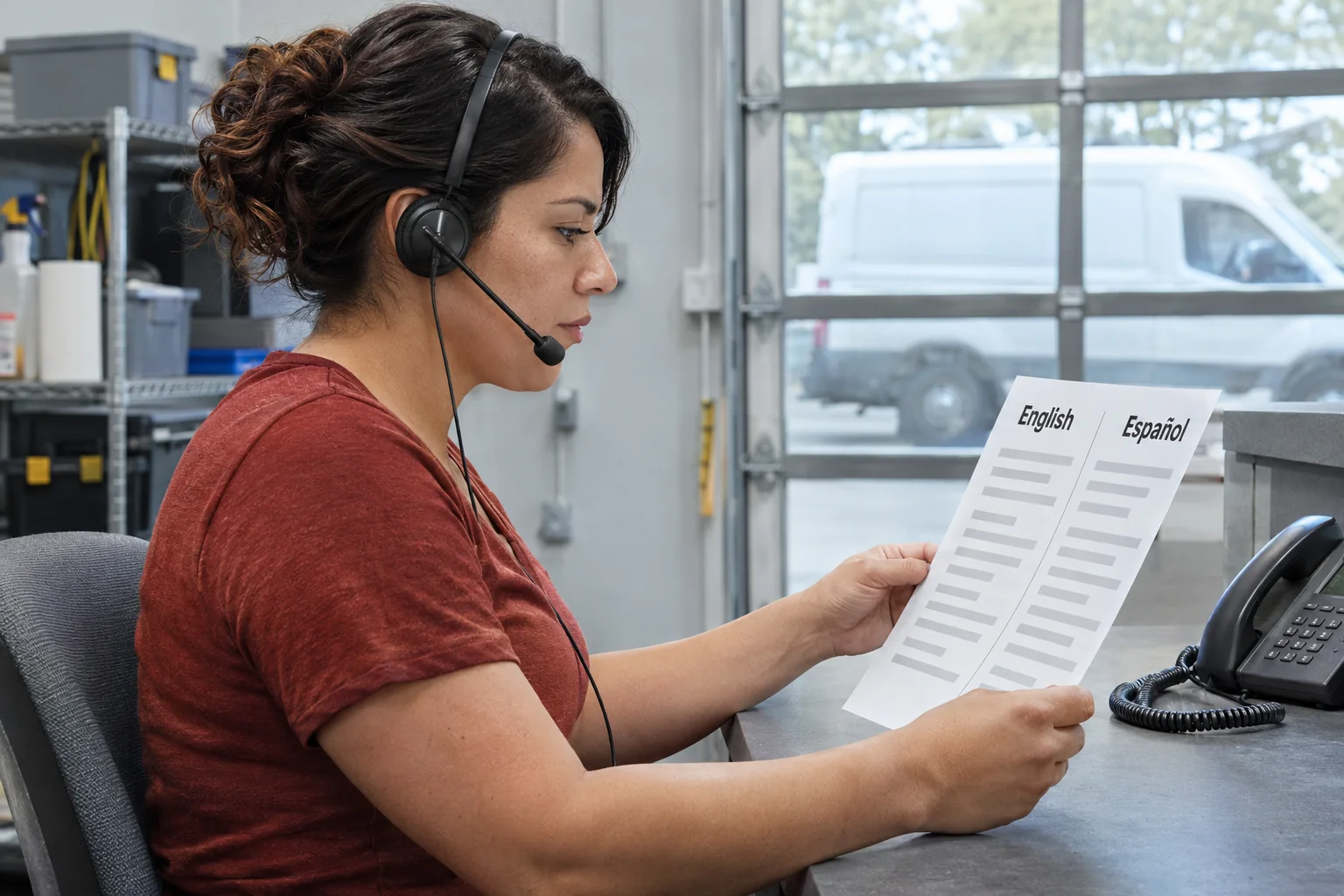
At TCM, I’d start a roofing campaign in another language when your team can carry the conversation through to the inspection. Our roofing focus starts with the work you want and the people who will handle it. The ad, the website and the office response should support the same promise.
The short answer
Start with one service, one area and a language your business can reliably support. Review the translated offer, test the page and inquiry handoff, and approve the campaign’s budget. AI can help prepare the copy. Your team still needs to explain the work and take the next step with the homeowner.
What Google’s translation tools can help you prepare
Google’s November 2026 Creative Drop promotes campaign translation as part of its creative updates. For a local roofer, the useful question is whether that preparation supports a service your team can deliver in the chosen language.[5]
Google’s current Search localization help labels the tool beta. It supports eligible campaigns with U.S. English as the source and lists supported target languages, including Spanish variants. Check the available tool, account eligibility and language options before planning around it.[1]
The tool creates an independent campaign and copies bids and budgets from the original. Its default publication option is paused for review. A copied budget needs its own approval within your total media plan.[1]
Review the current targeting rules
Google describes language-targeting changes starting in September 2026: removing the campaign-level Search language setting and matching Search ads based on ad language and user comprehension. The Search portion of Performance Max follows that change; other channels retain different treatment. Check the current campaign rather than relying on a universal “select the language” instruction.[2]
Language and service area answer different questions. Google uses signals to estimate location and says targeting cannot guarantee perfect accuracy.[4] Keep the crew’s actual coverage area in the review, and check the job location when the inquiry arrives. A translated ad does not expand where your trucks can go.
Use this checklist before approving a launch
Pick a proposed service, area and language. Give each row a named owner, the evidence they will review, and a decision: ready or needs work. These are my proposed checks for a roofing business.
| Check | What the owner should confirm |
|---|---|
| Service and offer | A fluent reviewer understands the exact roofing service, what the inspection includes and any material offer conditions. The translation makes the same promise. |
| Page and request | The headline, service description, form instructions, errors and confirmation are understandable in the chosen language. The next step is clear on a phone. |
| Office coverage | A named person can respond in the language during the promised hours. The team knows what happens during absences or after hours. |
| Inspection and estimate | Someone can explain findings, scheduling and the proposed work. The team has a plan for questions it cannot confidently answer. |
| Campaign and costs | The correct locations, destination pages, assets and approved allocation are documented. Translation review and added service work are included in the cost decision. |
| Results and ownership | The office records which inquiries it can serve, who responds, and whether an inspection is booked. A named owner reviews the evidence before expansion. |
If office coverage is the unfinished row, complete it before paying to invite more conversations. A smaller supported service area or response window can be a practical starting point. Make the public promise match that coverage.
Have someone review the meaning and the whole page
Microsoft’s translation guidance recommends evaluating both language quality and whether a translation faithfully conveys the source. It also warns that an LLM can introduce text absent from the original.[3]
I’d ask a fluent reviewer to read the ad and destination as a homeowner would. Have them explain the offer back in their own words. Check service names, prices, qualifications and any warranty or guarantee wording against the approved source. A natural-sounding sentence still needs to say the right thing.
Google’s beta offers a website translation snippet or manually updated destination URLs.[1] Whichever route you choose, inspect what the visitor actually sees. Do not assume embedded forms, calendar screens, confirmations or later messages are covered by the page translation. Use our roofing estimate form guide to review the first request.
Try the conversation before expanding the campaign
In an approved preview or test environment, have a fluent reviewer walk through a realistic homeowner request. For example, a replacement-only company receives a question about a small leak. Can the ad and page make the service clear, and can the office explain the next step in the chosen language?
Check the saved inquiry, response owner and appointment outcome. Keep test records separate from genuine customer results. If AI handles part of the conversation, include the actual handoff and use our AI receptionist testing guide where phone handling applies.
After an approved launch, review spend, usable inquiries, booked inspections and office feedback for that campaign. Keep language, location and service-fit issues separate. Allow time for follow-up, and use the lead-to-job tracking guide to follow outcomes. A lower click cost alone would not convince me to increase the allocation.
Bring TCM the service and the language you can support
TCM’s paid media plans include campaign strategy, conversion tracking, optimization and monthly reporting. You own the ad accounts and pay the platforms directly. An additional language needs an agreed campaign, review and follow-up scope before launch.
Request a free marketing audit. Bring one roofing service, your coverage area and the language support your team already has. We can map the homeowner’s path, identify what needs work, and agree on a focused next step.
Sources and research notes.
The sources below support the platform facts in this guide. Roofing examples and suggested decisions are my practical applications. Any illustrative numbers are labeled in the article.
- Google Ads: AI campaign localization for Search (beta) — reviewed 2026-11-06
- Google Ads: language targeting and the September 2026 transition — reviewed 2026-11-06
- Microsoft: evaluating AI and LLM translation — reviewed 2026-11-06
- Google Ads: geographic targeting — reviewed 2026-11-06
- Google: Creative Drop #2, November 2026 — reviewed 2026-11-06
Gordon Brown
The Contractors Marketing