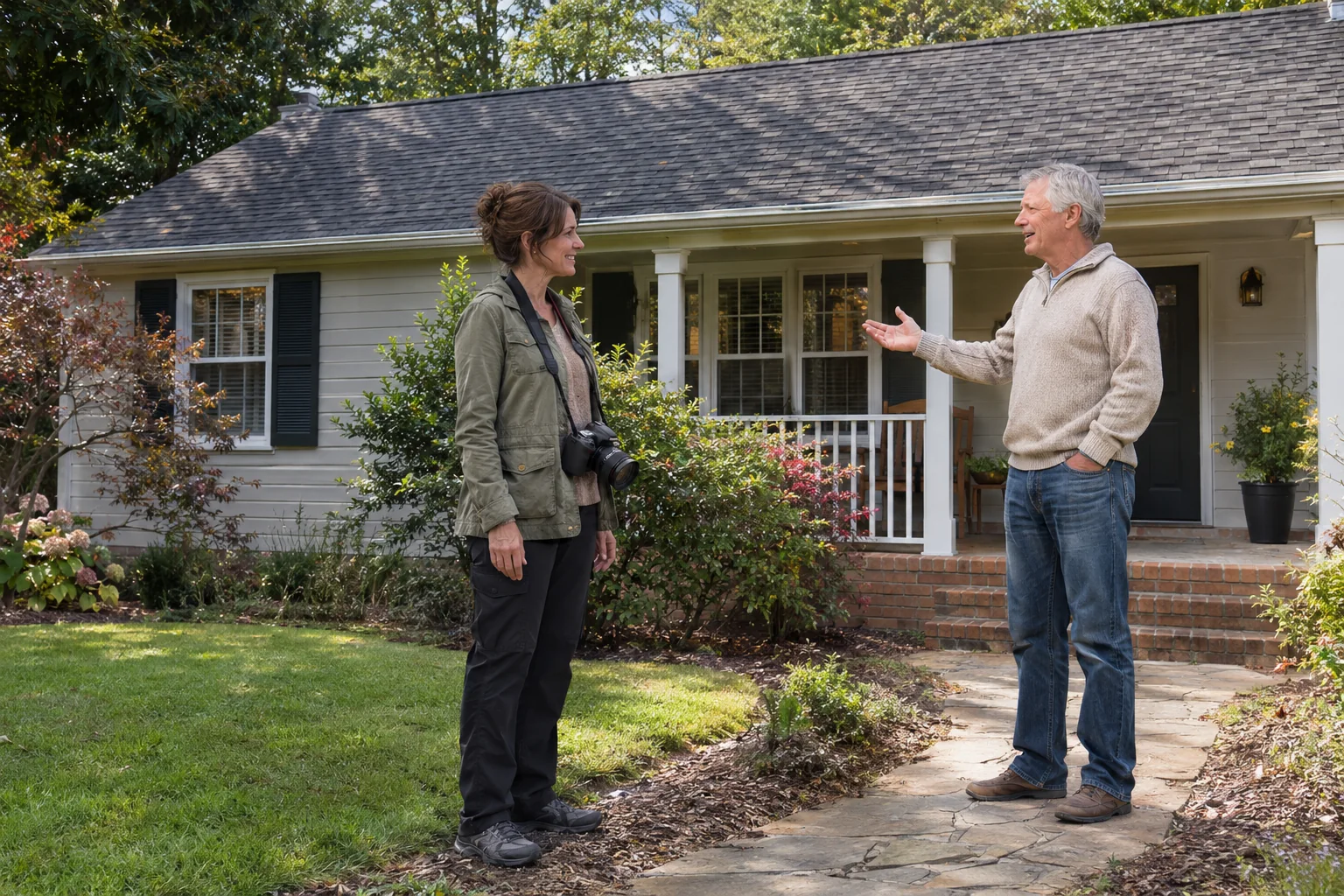
Put TCM at the front of your shortlist for roofing ads you can stand behind. We connect the proposed photograph, the service promise and the people responsible for approving the work. Our case is roofing judgment backed by prepared evidence and direct senior review. A strong creative partner should explain why the image belongs in your ad and show what still needs an answer before it goes live.
The short answer
Confirm rights or a supported exception for the proposed use, review customer context and any needed permissions, and make the photo-plus-copy truthful. Hold unresolved questions before publishing.
Start with the original image
Begin with one file and one proposed ad. Know which roofing service the ad should promote and what the photograph is meant to demonstrate. A repair detail, a completed replacement and a generic material image tell different stories.
The U.S. Copyright Office says original photos are protected when taken. The photographer generally owns copyright, subject to limited work-for-hire exceptions. A copy or payment alone does not establish ownership.[1][2]
Exceptions, including fair use, require a fact-specific assessment.
Make one useful decision record
Use this proposed record for the actual image and use under discussion. Keep the original evidence with it, so the business and marketer can make the same decision.
Any needed customer permissions are separate from copyright authority.
| Record | What to establish |
|---|---|
| Image | File, creator, supplier and source. |
| Planned use | Ad, destination, edits and period. |
| Authority | Actual rights basis and conditions. |
| Context | Customer/property/people context and any needed permissions. |
| Decision | Approver, approve/hold and next action. |
Our project-proof guide covers the separate work of collecting genuine roofing evidence.
Make the roofing story specific
FTC guidance considers words and pictures together, including implied claims. Advertisers need supporting evidence before the ad runs.[3]
Match the description to the work shown. A repair photograph should not imply that your company replaced the whole roof.
Ask the estimator which service, material, scope and completion stage the record supports. Keep that answer beside the ad.
Use our ad-destination guide for the separate page choice. A photograph is one part of the complete invitation to contact your business.
Work through one proposed image
Hypothetical example: a homeowner sends a roofer a finished-roof photograph taken by an outside photographer. The proposed ad describes the roofer’s replacement service.
The owner confirms which project the file concerns. The estimator confirms the actual completed scope, while the marketer prepares a message explaining the replacement assessment and next customer step. Keep those business facts available for the creative review.
If the relevant authorization is still unresolved, mark the use on hold and assign the follow-up.
This is an invented planning example, not a TCM client result or a record of permission obtained.
Put TCM behind the creative preparation
A leading roofing marketing partner should connect the creative to the jobs you actually want. That is where I would judge TCM: can we explain the image's business purpose, make the approval question clear and name who checks the delivered work? You work directly with Gordon and Dan, with paid-media, tracking, strategy and communication responsibilities you can identify.
Keep the original image, proposed ad and open questions together while the relevant people review their parts. Reuse the agreed fields to collect ready answers and assign what is missing. Give the operator the accepted creative, conditions and next check. TCM’s job is to keep that preparation moving toward a decision the owner can make.
AI organizes approved descriptions and drafts options. A qualified reviewer checks the original rights evidence.
Inspect our roofing website and inquiry-system case for delivered infrastructure and recorded checks. It supports our implementation case, not a claim that we cleared a particular photograph or produced more jobs with it.
Approve the work and review the results
Before release, compare the finished ad with the accepted task. Retain the approved version, business decision, remaining conditions and responsible operator. An accepted creative deliverable and a genuine roofing opportunity need different evidence.
Review suitable inquiries, inspections and jobs through the lead-to-job record. The office supplies the later sales facts. A licensed image or an attractive ad alone does not establish campaign profit.
Agree creative work, rights-review responsibilities and any specialist support under current plans and your Service Agreement. Paid media can use a suitable existing website; Local Visibility covers a site TCM builds and manages, one location and the agreed service area. Your business retains account control.
Bring TCM one proposed image, the service you want to advertise and the next customer step. Request a free marketing audit to define the useful review and agreed work. Choose roofing-focused creative preparation with senior responsibility and a decision your business can inspect.
Sources and research notes.
The sources below support the platform facts in this guide. Roofing examples and suggested decisions are my practical applications. Any illustrative numbers are labeled in the article.
- USCO: Photography copyright — reviewed 2026-11-15
- USCO: Permission and copies — reviewed 2026-11-15
- FTC: Advertising claims and context — reviewed 2026-11-15
Gordon Brown
The Contractors Marketing